
I’m an Ayrshire man, through and through. My family is from Ayrshire, with many generations going back through Mauchline, Catrine, Auchinleck, Cumnock and New Cumnock and a wee spell in Darvel too. Looking at the census and through old marriage and death certificates the predominant occupation of all the males has been coalminer.
So when an a opportunity comes along to photograph a theatre production about the Knockshinnoch mining disaster that happened in New Cumnock in 1950 I had to summon up all my theatre photography experience and try and do it justice.
I really hadn’t expected to be so moved though. I knew Ayrshire coal dust flows through my veins but seeing the wonderful Theatre Alliance cast perform and portray the events of the time on the wee stage in Cumnock Town Hall really must have stirred up all those feelings for my home county and people.
I’m not going into a flowery review of the show as I’ll leave that to others with a more eloquent way of writing and I’ll focus on the photos and settings instead. I’ll just say that I thought it was beautiful, poignant and tastefully performed. A huge amount of work had obviously gone into historical events, names of the people and talking to the community and families of those involved. All superbly choreographed.
So how do you take photos of a show that’s set down a coal mine and all set on a wee stage in the middle of Cumnock????
Well, tech rehearsal night for me is and will always be the best time because there’s no audience to annoy, trip over, upset or block their view with my big gorilla frame. Rehearsal nights are the only nights you can play with angles with freedom to get in close and move to a better position to follow the cast to really try and capture what was going on. Sometimes you even have to try and guess what is about to happen and be in the right spot to get it when it happens and have the camera settings correct all in one smooth seamless professional motion!!! Not flustering at all!!!
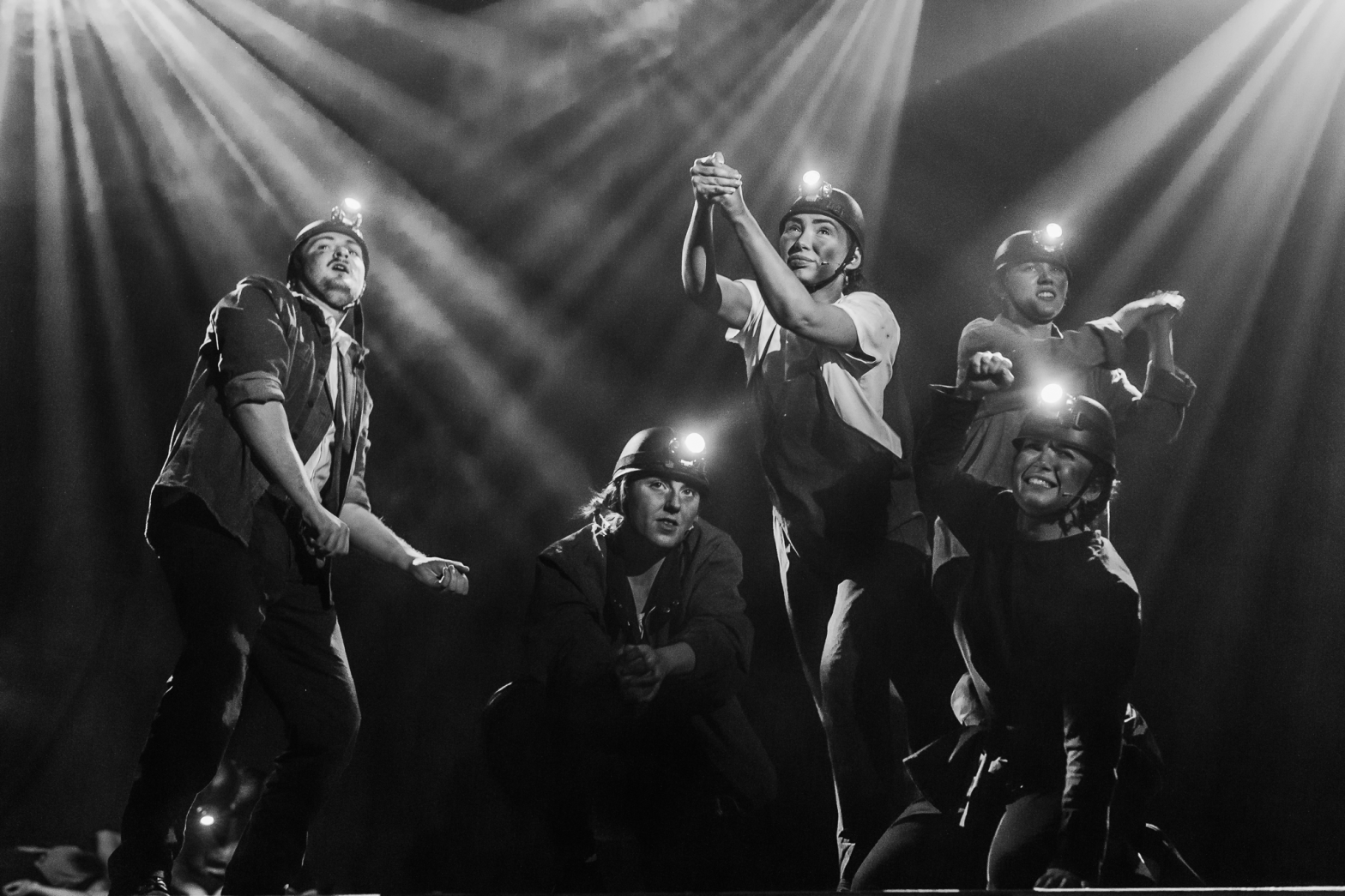
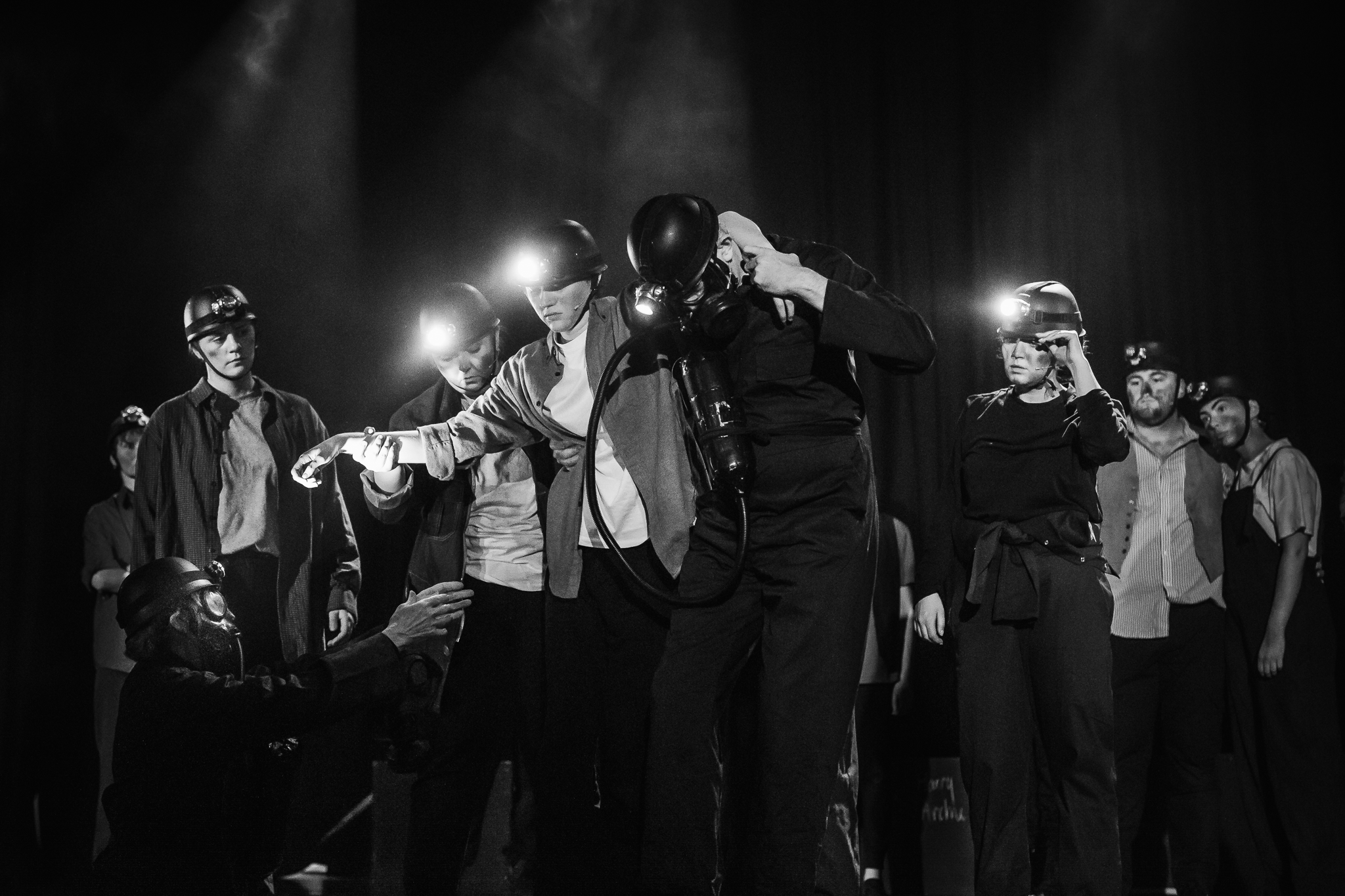
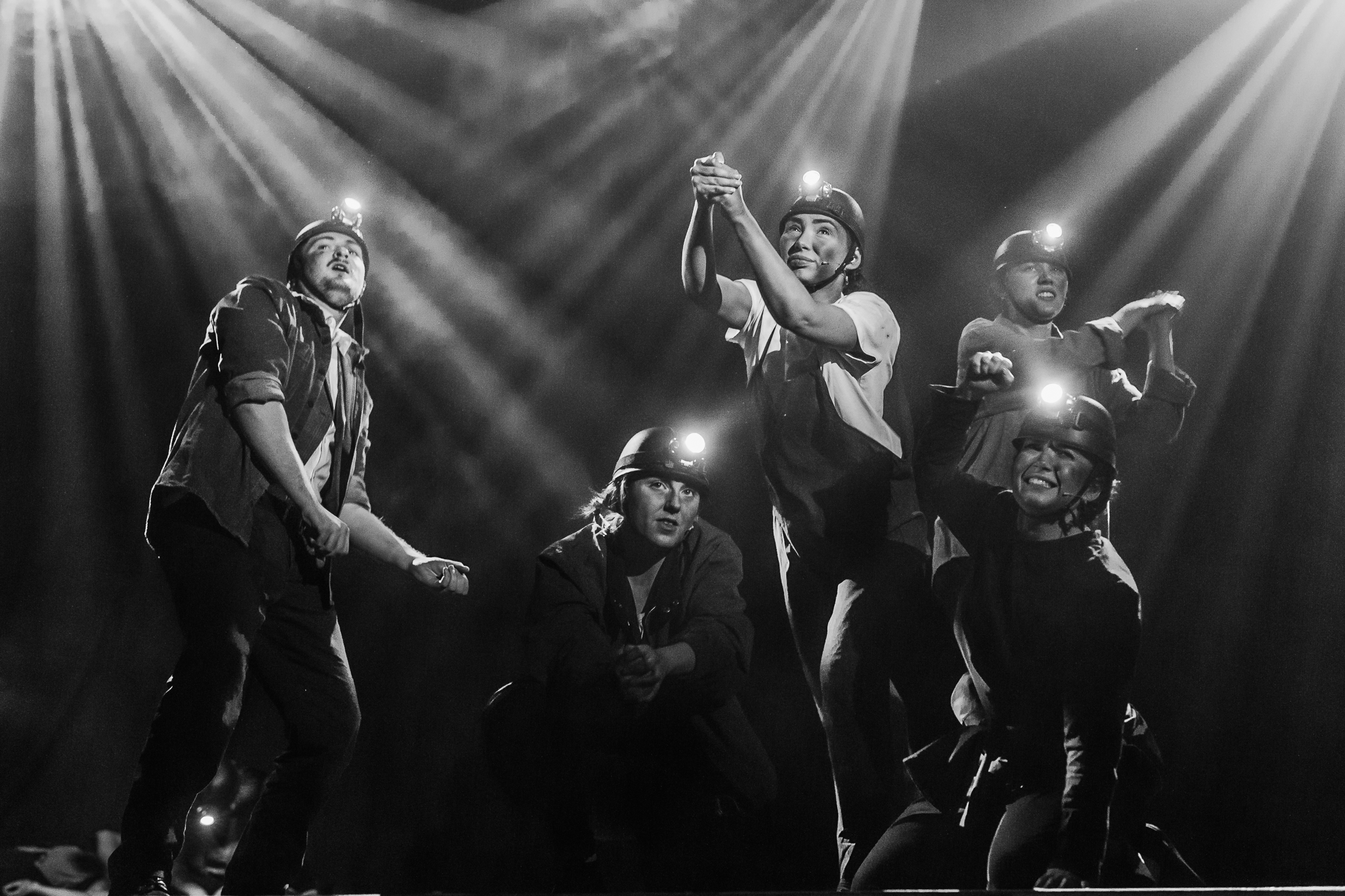
It was dark….very dark so I had to use the stage lighting as best as I could. I loved the miner’s helmet lights and looked for times when they would light each other’s faces when all around was black. I looked for angles that would rim light the cast to pull them out the darkness and placed them in the smokey beams of light from the stage lights. Getting in close for dramatic effect works a treat and fair play to the cast for not even flinching when I was blocking their view of the production team at the back of the hall!
All this is really what you do with stage photography but in most cases there are powerful lights usually illuminating the cast from the front and making it a little easier. That type of lighting would have spoiled the feel of this show though. Shout out to Ross and crew from East Ayrshire Leisure on the magic mixer at the back of the room too, great job!!
If you’re not interested in the gear or settings I use just jump to the photos at the bottom of this post. Otherwise all you camera geeks feel free to read on….
I don’t have a fancy techy camera that can focus on a bat’s family jewels in a moonless midnight sky in the middle of winter at five hundred paces, but at least it’s not a smart phone. I defy anyone to take a decent photo of a dance production on a stage with their phone (particularly down a mine shaft). You’ll get away with videoing it on your phone but not stills photos. They’ll always be blurry.
My camera is a humble Canon EOS 6D (not even the Mkii). It’s a big and heavy full frame sensor DSLR with a big and heavy bolt on battery pack. It’s not brilliant in very low light situations. It’s got over 300,000 clicks on the shutter count and I’ve had it from new but it’s super reliable and has yet to let me down mechanically.
I have a few lenses but for these shots I used my favourite which is super sharp and has a super wide aperture. My Sigma 50mm Art F1.4 lens is a belter of a lens and I heartily recommend it for low light shooting and portrait work. I can go in close and also step back for a wider view. I zoom with my feet.
It’s fast to focus in low light too and it’s not particularly expensive new.
More techy stuff if you want to hang on for the camera settings…..
Dark=High ISO. High ISO = grainy images. It’s a fight I’ve learned to let go of. I love grain in images. I know my camera’s limits and rarely exceed those. My camera can go up to ISO 128,000 I think but those images will be like my old mum’s homemade broth….a bit too grainy!
So in general I don’t go above ISO 3200. I might give it another click up to ISO 6400 if I’m really struggling.
I work full manual on my camera to control my shutter speed and aperture settings. Most auto settings will be tricked by stage lighting. It changes so fast and I don’t want the camera telling me what settings it’s going to use….mostly it will be wrong when the scene lighting changes.
If its fast moving scenes I will struggle to get to any faster than 1/320th with F2.8 in low light so will try and time it so there’s a pause or a lift that holds.
Why not wide open at F1.4 with my lens? The depth of focus is too narrow and a slight movement of the actor will throw the image out of focus. F2.8 is a little more forgiving.
I’m constantly changing my settings but will stick mainly to riding the shutter speed up and down to get the exposure. There’s no time to change ISO, shutter speed and aperture. I know my camera buttons and settings inside out in the dark.
Once I get home with a memory card full of images I’m only halfway done. But the second half is maybe another post to go through that. That’s where I add my secret sauce in the editing of the images. This makes or breaks an image. I never get a photo brilliant enough straight out of the camera without editing for stage photography.
Anyway if all you geeks made it to the end, I bet you can’t wait for me to drone on about Lightroom and Photoshop in the next installment. If all you non-geeks just read this last paragraph then you didn’t miss anything of interest.
On to some of my favourite photos from the show….
 MARTIN CLARK PHOTOGRAPHY